
Your first week in the US, day by day (days 1 to 7)
Oct 06, 2026
If there's one piece of advice we'd give anyone relocating to the US for work, it's this: land a week before your first day.
H-1B and L-1 visa holders can be admitted up to 10 days before their start date, so there's room to do it. And you'll want every one of those days. Once the job starts, your evenings and weekends disappear fast, and the admin doesn't stop just because you're busy.
Here's roughly how that first week should go.
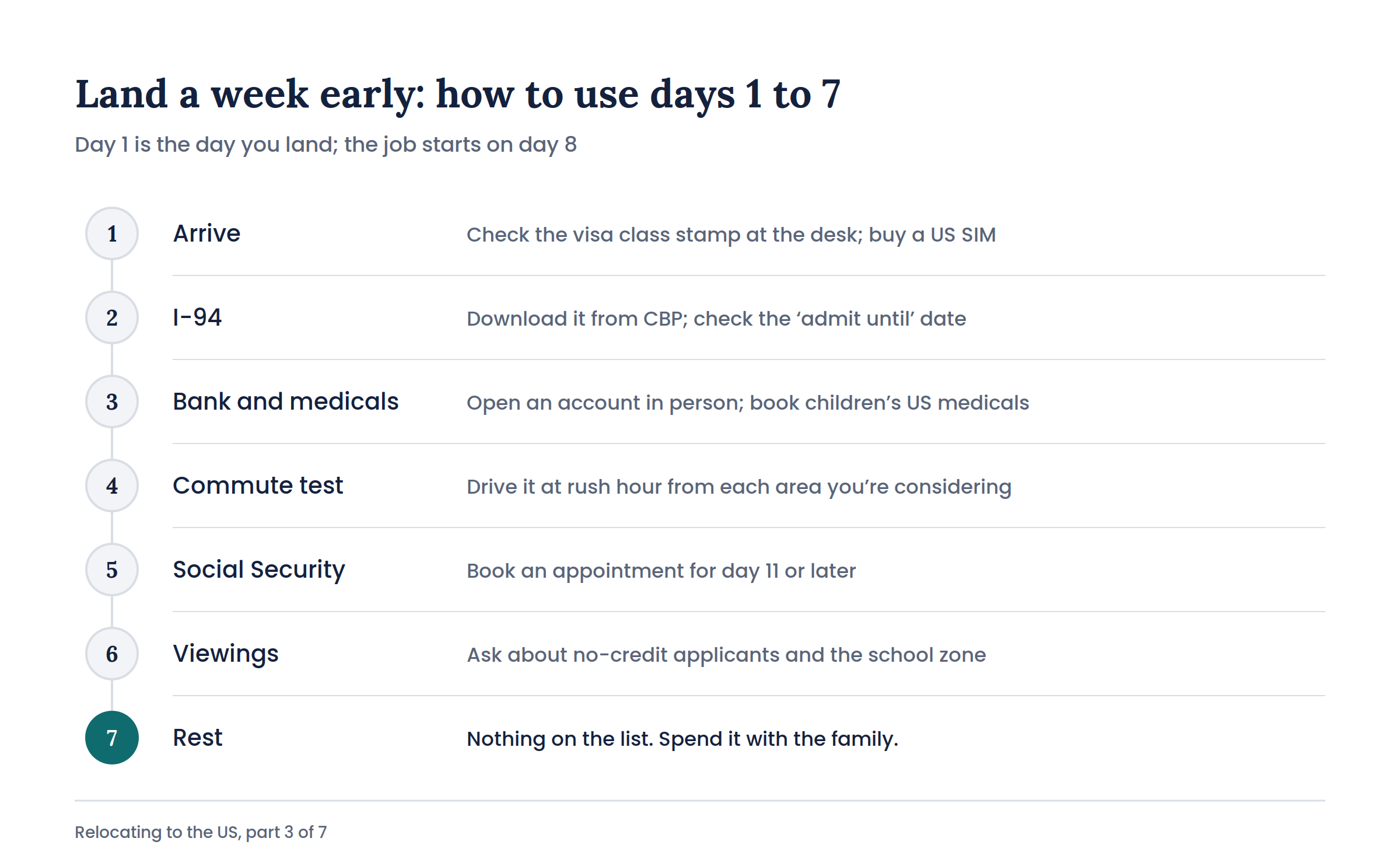
Day 1: Arrival. Check the stamp, get a phone number
At the airport, before you walk away from the immigration officer, check the stamp in your passport. It should show your visa class. If it's wrong, get it fixed there and then. Correcting it later is much harder.
Then buy a US SIM card. You'll need a working US phone number for almost every form you fill in from here on: bank, landlord, schools, the lot.
Day 2: Download your I-94
Go to the CBP website and download your I-94 record. This is the electronic record of your arrival, and it's more important than most people realise.
Check the "admit until" date carefully. That date is your actual permission to stay in the US, and it can be different from what your visa says. If it's earlier than you expected, you need to know now.
Day 3: Open a bank account and book medicals
Open a bank account in person. Take your passport, visa, I-94, offer letter and your temporary address. Don't worry if you don't have a Social Security number yet. Most banks will open an account without one, and payroll can start without one too.
If you have children, book their US medical checks today. Schools won't enrol them without one, and appointments aren't always available at short notice.
Day 4: Drive the commute at rush hour
Pick the areas you're considering living in, and drive from each one to the office at rush hour. Not on a quiet Sunday. Do it on a weekday, at the time you'd actually be travelling.
US traffic may change your idea of what "20 minutes from the office" means. Better to find out now than after you've signed a 12-month lease.
Day 5: Book your Social Security appointment
Book an appointment at the Social Security office for day 11 or later. The Social Security Administration advises waiting about 10 days after arrival, because it has to verify your entry with the Department of Homeland Security first.
If you go earlier, you'll probably just be asked to come back, and that's a wasted morning you don't have.
Day 6: Viewings
Line up property viewings and ask every landlord two questions.
First: how do you handle applicants with no US credit history? Some landlords are used to relocating professionals; others will make it much harder.
Second: which school is this address zoned for? In much of the US, your address decides which state school your children go to. Fall in love with a house in the wrong zone and you could end up with the wrong school.
Day 7: Nothing
Seriously. Spend it with the family. Explore the neighbourhood, find a decent coffee, let the children get their bearings.
Week two starts with a new job, and you'll be glad of the breather.
The takeaway
A well-planned first week doesn't just get the paperwork moving. It sets up everything that follows: the bank account for payroll, the Social Security number for your driving licence, the school-zoned address for your children. Treat it as part of the job.
Next in the series: days 8 to 14, when the job starts and the paperwork that decides your first year arrives.
