
Week three: the lease, and everything that follows (days 15 to 21)
Oct 06, 2026
Somewhere in week three, you'll sign a lease. It feels like the end of a long search, and it is. But it's also the start of a chain reaction. Most of the rest of your first month depends on that piece of paper.
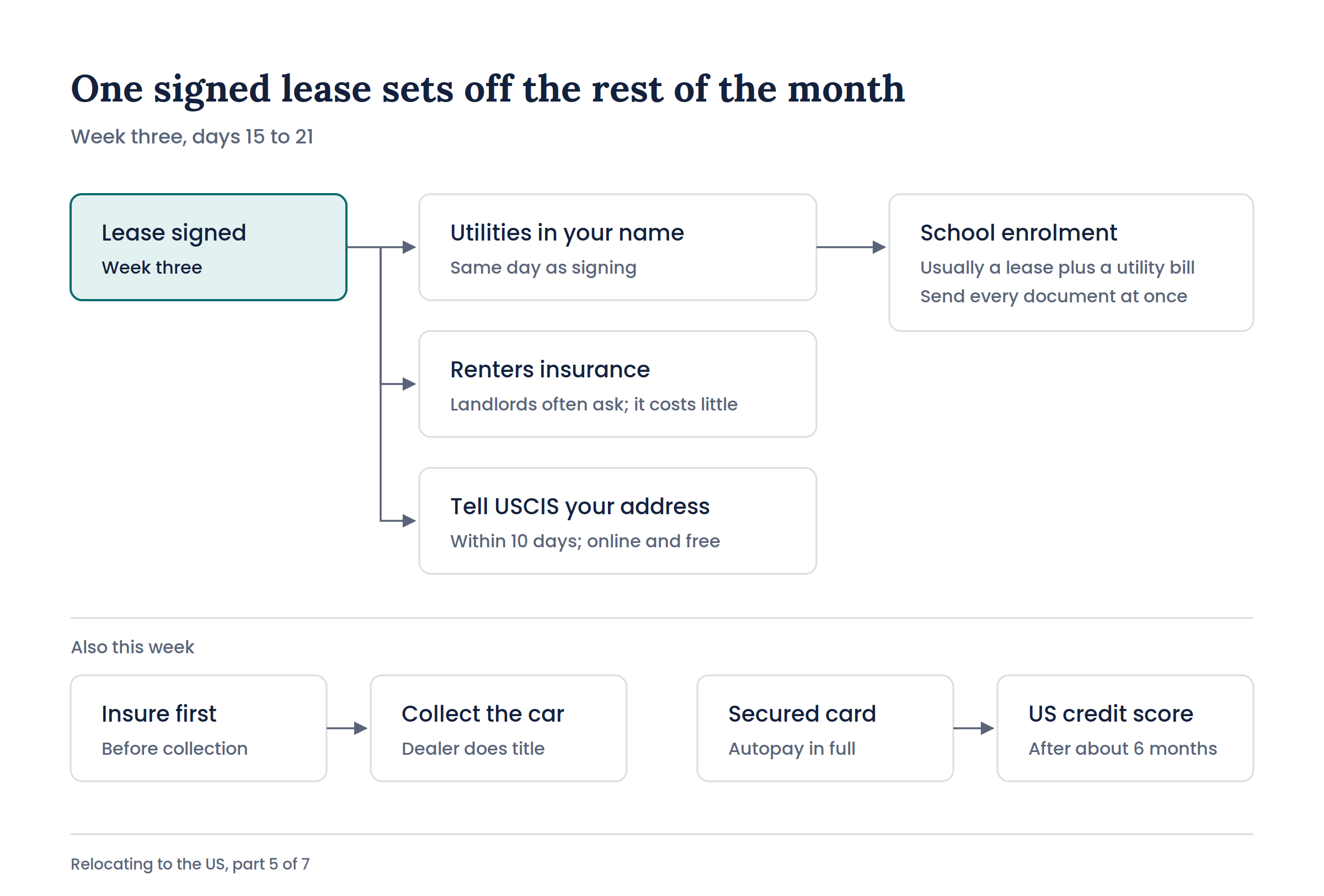
Once it's signed, three things need to happen quickly.
1. Put the utilities in your name the same day
Set up electricity, water (if the landlord doesn't cover it) and internet in your own name, on the day you sign.
This isn't just about having the lights on when you move in. A lease on its own often isn't enough proof of address for a school, but a lease plus a utility account usually is. Many school districts won't process an application until every document has been uploaded. Send it all in one go and the children can be in class within days. Send it piecemeal and you'll be waiting.
2. Buy renters insurance
Landlords increasingly ask for it, and it costs very little. It's one of the easiest boxes to tick in the whole move, so tick it straight away.
3. Tell USCIS your new address within 10 days
This is the one people miss. Anyone who isn't a US citizen and is staying in the US for more than 30 days has to tell US Citizenship and Immigration Services every time they move. You have 10 days from moving in.
It's done online and it's free. But don't assume the Post Office has it covered, because its mail forwarding service doesn't pass anything on to immigration. Missing this can cause real trouble with later applications, including a green card.
Two more jobs for week three
A car. Arrange car insurance before you collect the car. Each state sets its own legal minimum cover. In Florida, for example, it's $10,000 of personal injury protection and $10,000 of property damage liability, though almost nobody sensible stops at the minimum. The good news is that the dealer normally handles the title and registration for you.
A credit card. With no US credit history, you'll probably start on a secured card. That's a card backed by a deposit you pay up front, which effectively becomes your credit limit. Set it up to pay the full balance automatically every month.
It doesn't feel glamorous, but it matters. After about six months of on-time payments, you'll have a US credit score, and your next lease, car loan or mortgage will be a lot easier.
Once you've moved in
Two practical jobs before you put your feet up:
- Test the smoke alarms.
- Put together an emergency kit for your area. That means water, torches, batteries, and your important documents in a waterproof bag. In hurricane states like Florida, this is essential.
Then take a day off
You've earned it. Week four has a deadline of its own, and it comes with one of the most important forms of your first month.
Next in the series: days 22 to 30, covering the driving licence, your first payslip, and starting to feel at home.
