
The three months before you fly: avoiding the expensive mistakes
Oct 06, 2026
You've signed the contract. The flights are booked. It's tempting to think the hard part is done.
It isn't. In our experience, the expensive mistakes in a US move mostly happen in the three months before you fly. Nearly all of them come from leaving something too late. Once you're on the other side of the Atlantic, a problem that would take an afternoon to fix in the UK can take weeks.
Here are the ones we see come up again and again.
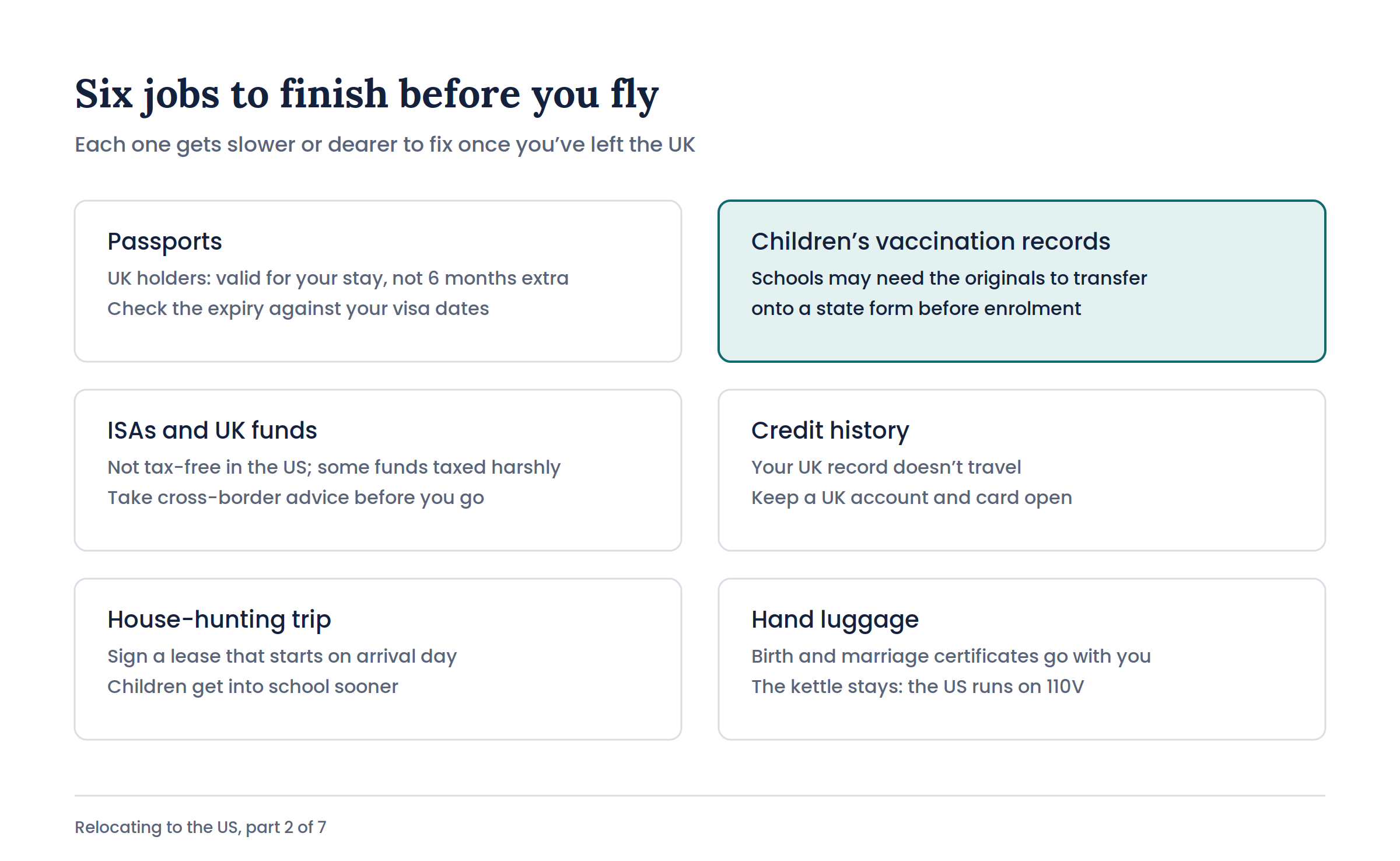
Passports: you probably don't need to panic-renew
Plenty of people renew their passports in a rush because they've heard you need six months left on them to enter the US. If you hold a UK passport, you don't. The UK is on US Customs and Border Protection's exempt list (updated 18 December 2025), so your passport only has to be valid for the length of your stay.
That said, if you're travelling on a work visa, check the expiry date anyway. CBP can cut your permission to stay short at the date your passport runs out, whatever your visa says. A visa that runs for three years is no help if your passport expires in eighteen months.
Children's vaccination records
This one catches out a surprising number of families. Many US schools won't accept a UK vaccination record as it is. In some states, a local doctor has to transfer it onto the state's own form first. In Florida, for example, that's the DH 680. The doctor will need your original records to do it.
No records means no form, and no form means the children sit at home instead of starting school. Dig out the red books and GP printouts now, and pack them where you can get at them.
ISAs and UK investment funds
The US tax system doesn't recognise an ISA as tax-free. And some UK investment funds are taxed very harshly by the IRS once you become a US taxpayer.
The time to deal with this is before you go, while you can still restructure your savings and investments on UK terms. Take proper cross-border tax advice from someone who understands both the UK and US systems. Unwinding the wrong set-up after you've arrived is almost always more expensive.
Your credit history doesn't travel
You may have a spotless UK credit record, but it won't follow you. As far as US lenders and landlords are concerned, you're starting from zero.
In practice, landlords will ask for a bigger deposit, a copy of your offer letter and several months of bank statements. Have those ready. And keep at least one UK bank account and credit card open. You'll need them in the meantime, and they're useful long after you've built a US credit score.
Make the house-hunting trip count
If your employer offers a house-hunting trip, use it to sign a lease that starts on the day you arrive. That's not just about having somewhere to live.
Schools usually want to see a lease and a utility bill before they'll enrol a child. Turn up with a signed lease already in hand and your children can be in school about two weeks earlier than if you start house-hunting after you land.
The smaller things that still matter
A few quick ones to add to the list:
- Get a no-claims letter from your car insurer. It may help when you insure a car in the US.
- Pack birth and marriage certificates in your hand luggage, not in the sea freight. You'll need them sooner than your boxes will arrive.
- Don't ship the kettle. The US runs on 110 volts, and most UK appliances won't work without a converter.
The takeaway
None of these jobs is hard on its own. The trouble is that they all take time, and most of them get harder, or impossible, once you've left. Start on them as soon as the contract is signed, and you'll land with far fewer surprises.
Next in the series: your first week on the ground, day by day.
